Mold Remediation for Homes in Pacific
Request an estimate today
Mold remediation is the full job of dealing with mold in a home. A provider finds where it grows. They seal off the area, clean or remove what is affected, and dry the space. Then they help you fix the cause, usually moisture.
Keepscurrent Mold Help is a referral service. We do not do the work. We link you with independent local providers in our network who do. This page explains your options and the likely next steps in plain words. It also shows what drives the price, so a written quote makes sense when it arrives. Know your options, then choose with confidence.
Found Mold? Start Here
You may see dark spots on a wall. You may smell something musty in the basement. Either way, take a breath. Mold is common, and it can be handled.
First, stay out of the area if you can. Do not scrub it dry or blow a fan across it. That can send spores into other rooms. Spores are the tiny seeds mold uses to spread.
Next, look for the water. Check for leaks, damp walls, and wet floors. Then request an estimate from a local provider.
Why Mold Gets Worse Over Time
Mold needs three things: moisture, food, and time. Your home has plenty of food. Wood, drywall, and dust all work.
Once a spot stays damp, mold can start to grow within a couple of days. It then creeps into hidden places. Think behind walls, under floors, and above ceilings.
The longer it grows, the more material it can ruin. A small job can turn into a large one. That is why acting soon often saves money.
What Mold Remediation Includes
The steps vary by home. Most jobs follow the same path.
- A provider checks the size and location of the mold.
- They seal off the work zone.
- They remove materials that cannot be cleaned, such as soaked drywall.
- They clean surfaces that can be saved.
- They dry the space with fans and dehumidifiers.
- They check that the area is ready for repairs.
This is residential mold removal in plain terms. It is more than a spray and a wipe. Bleach alone rarely solves it.
Why Containment Matters
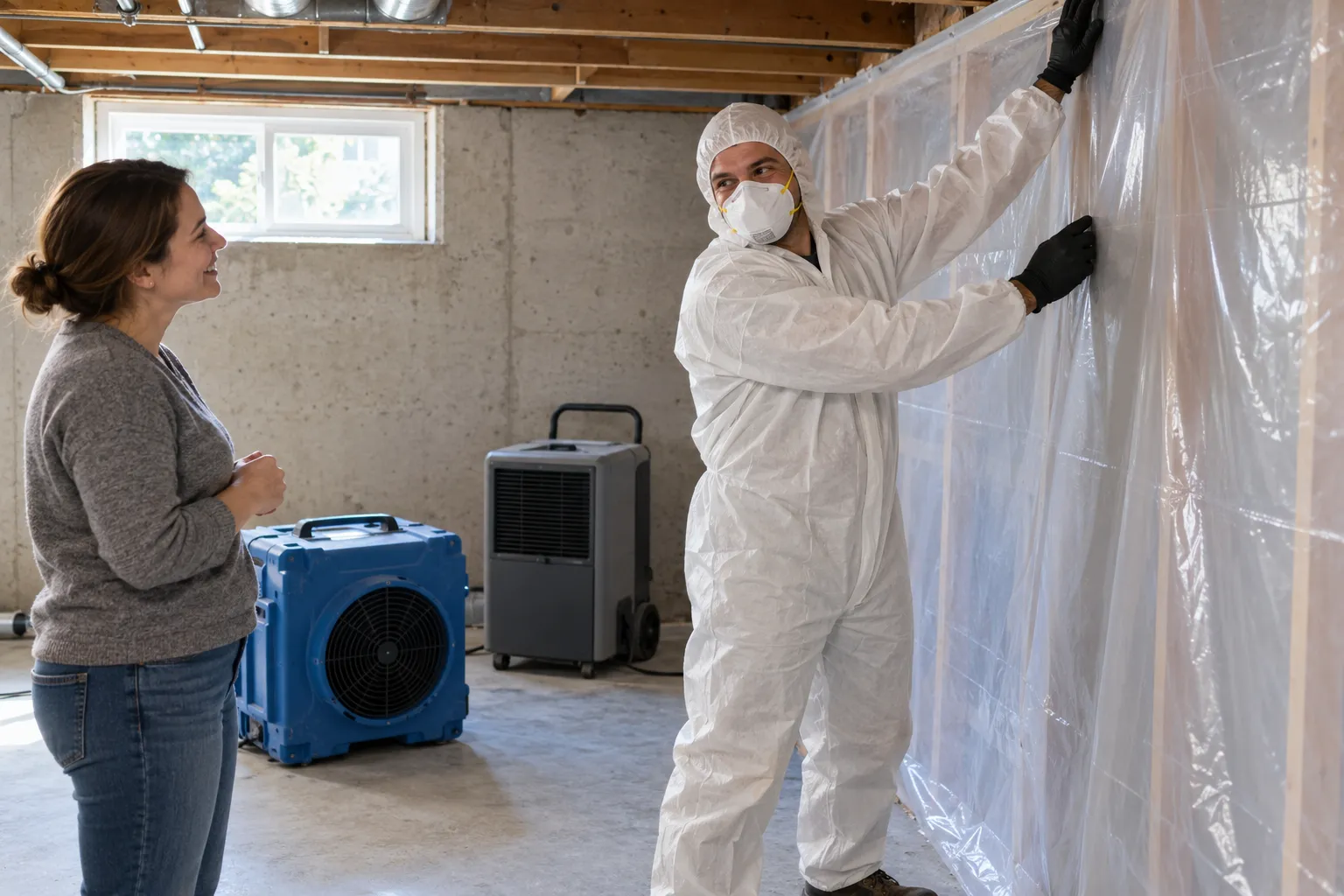
Containment means keeping mold in one place while it is cleaned. Providers hang plastic sheets and tape the edges. Many also use a machine that pulls air out of the zone.
Without this step, spores can drift through your vents. Then you have a bigger problem than the one you started with.
Ask any provider how they plan to contain the work. A clear answer is a good sign.
Fix the Water Problem First
Mold comes back if the moisture stays. So the cause needs a fix. Cleaning alone is not enough.
Common causes in homes like yours include:
- Sump pumps that fail during spring flooding
- Damp basement walls after deep frost thaws
- Roof leaks after hail or storms
- Humid summer air in closed-up rooms
- Poor airflow in bathrooms and crawl spaces
Some providers fix the moisture source themselves. Others point you to a plumber or roofer. Ask which one applies to your job.
Know Your Options
You do not have to pick the biggest plan. Look before you leap.
For a small patch, a limited cleanup may be enough. For mold inside walls, a provider may need to open them. If you see widespread growth, you may need full containment across several rooms.
If the mold looks dark or you worry about black mold remediation, ask about it directly. Color alone does not tell you the type. Some homeowners also ask for certified mold testing before work begins. That can show what you have and where. It is a separate step, and a provider can explain whether you need it.
Request a callback to check provider availability in your area.
What Drives the Price
Price depends on the job, not just the mold. The main drivers are:
- How much area is affected
- Whether mold is behind walls or under floors
- How much material must be torn out
- How hard the space is to reach
- How much drying is needed
Typical U.S. ranges are in the cost table below. Your quote may land outside them. Quote in writing, and make sure it lists each task.
Insurance Basics
Some policies may cover mold that follows sudden damage, like a burst pipe. Many do not cover mold from slow leaks or long neglect. Check your policy, or ask your insurer.
Providers can often help document damage for a claim. Photos and written notes help. Keep your own copies too.
How to Choose a Provider
You may search mold inspection near me and see a long list. Here is a simple way to sort it out.
- Ask for a written quote with each task listed.
- Ask about licenses and insurance that your state requires.
- Ask how they contain the work.
- Ask what they do about the moisture source.
- Ask if they hold any training or certifications, and what those mean.
Get more than one quote if you can. A big gap between two quotes is worth a question.
After the Work Is Done
When the work ends, the room should be dry and clean. Ask the provider what the final check looks like. Some homeowners also request a follow-up test.
Then repairs can start. That means new drywall, paint, or flooring.
Keep an eye on the area for the next few weeks. Run a dehumidifier in damp spaces. Keep humidity low, ideally under about 50 percent. If you see a musty smell again, tell the provider.
What's Included
Careful Mold Assessment
A provider looks at where mold grows, how far it spread, and what material it touched.
Sealed Work Zone
Plastic sheets and air control keep spores from drifting into the rest of your home.
Removal and Cleaning
Soaked materials come out. Surfaces that can be saved get cleaned and dried.
Moisture and Repair Advice
Providers point out the water source and explain what repairs may come next.
Typical Mold Remediation Costs
Costs depend on the size of the area, the materials affected, and how hard the job is to reach. These are typical U.S. ranges only. Always ask for a written quote.
| Item | Typical range | Notes |
|---|---|---|
| Small area cleanup | $500 – $1,500 | One wall or a small patch |
| Single room | $1,500 – $4,000 | Includes containment and drying |
| Basement or crawl space | $2,000 – $6,000 | Size and access change the price |
| Whole-house project | $10,000 – $30,000 | Mold in many rooms or the HVAC system |
| Drywall or insulation replacement | $500 – $3,000 | Depends on how much is removed |
| Moisture source repair | $500 – $5,000 | Leak, sump pump, or drainage fix |
How It Works
Share Your Situation
Tell us where you see mold and any leaks or damp spots you have noticed.
Get Matched Locally
We connect you with an independent provider in our network who serves your area.
Review the Written Quote
Compare the tasks, materials, and price. Ask questions about anything unclear.
Schedule the Work
Pick a provider and set a date that fits your home.
Why Call Keepscurrent Mold Help
Plain Answers
We explain each step in simple words, so you know what the provider will likely do.
Local Providers
Independent providers in our network know the basements, storms, and humid summers in your area.
Price Clarity
Learn what drives the price first. Then a written quote is easy to read.
No Pressure
Request an estimate with no obligation, then take your time to decide.
Other Services
Need mold remediation in Pacific?
Send a quick request to compare options and get a written quote from a local provider. Prefer to talk? Request a callback to check provider availability.
No obligationMold Remediation FAQ
How much does mold remediation cost?
Typical U.S. costs run from about $500 for a small patch to $30,000 or more for a whole house. Size, access, and materials drive the price. Get a quote in writing.
Can I remove mold myself?
Very small surface spots on hard materials may be safe to clean yourself. Larger areas, mold in walls, or health concerns call for a provider. Wear protection and do not stir up spores.
Does homeowners insurance cover mold remediation?
Some policies may cover mold that follows sudden damage, like a burst pipe. Many exclude slow leaks. Check your policy, and ask providers to help document the damage for a claim.
Tell us what happened
Send a quick request to compare options and get a written quote from a local provider. Prefer to talk? Request a callback to check provider availability.
No obligation